Chinese
 English
 Deutsch
 italiano
 español
 português
 Nederlands
 日本語
日本語 한국의
한국의




- Comment choisir un mélangeur de pâte de batterie pour la production industrielle
- Procédés d'empilage et d'enroulement des cellules de batterie dans l'assemblage des batteries
- Une feuille de route technique des lignes de laboratoire de batteries et des lignes pilotes aux solutions de lignes de production de batteries à grande échelle
- TOB NEW ENERGY : fournisseur chinois de solutions intégrées pour batteries, d’équipements et de matériaux aux lignes de production clés en main
- Ingénieur senior de TOB nommé mentor diplômé de l'industrie de CSU
Formation et classification dans la fabrication des batteries lithium-ion
La formation et le classement des capacités figurent parmi les étapes finales et les plus critiques de fabrication de batteries lithium-ion Bien que ces étapes interviennent après la fabrication des électrodes et l'assemblage des cellules, elles influencent fortement la stabilité électrochimique, la sécurité, la constance et la durée de vie du produit final. Dans le domaine industriel lignes de production de batteries Le processus de formation active la batterie pour la première fois, tandis que le processus de classement évalue et classe les cellules en fonction de paramètres électriques mesurables.
D'un point de vue ingénierie, ces opérations ne se limitent pas à de simples procédures de charge et de test. Chaque étape – remplissage d'électrolyte, vieillissement, formation, remplissage secondaire, évaluation de la valeur K et classification de la capacité – est conçue en fonction des mécanismes électrochimiques, du comportement du transport de masse, du dégagement gazeux et des exigences de contrôle qualité. Dans les usines de batteries modernes, la conception de ces procédés doit être intégrée à l'agencement global de la ligne de production, aux capacités des équipements et aux spécifications de performance cibles. Pour les fabricants construisant de nouvelles installations, ces étapes sont généralement mises en œuvre dans le cadre d'un processus complet. solution de ligne de production de batteries au lithium , où systèmes de formation , les chambres vieillissantes et machines de classement sont configurées en fonction des exigences de capacité et de chimie.
Cet article fournit une explication technique détaillée de chaque étape du processus de formation et de classification des capacités, ainsi que des raisons physiques et chimiques qui sous-tendent ces opérations.
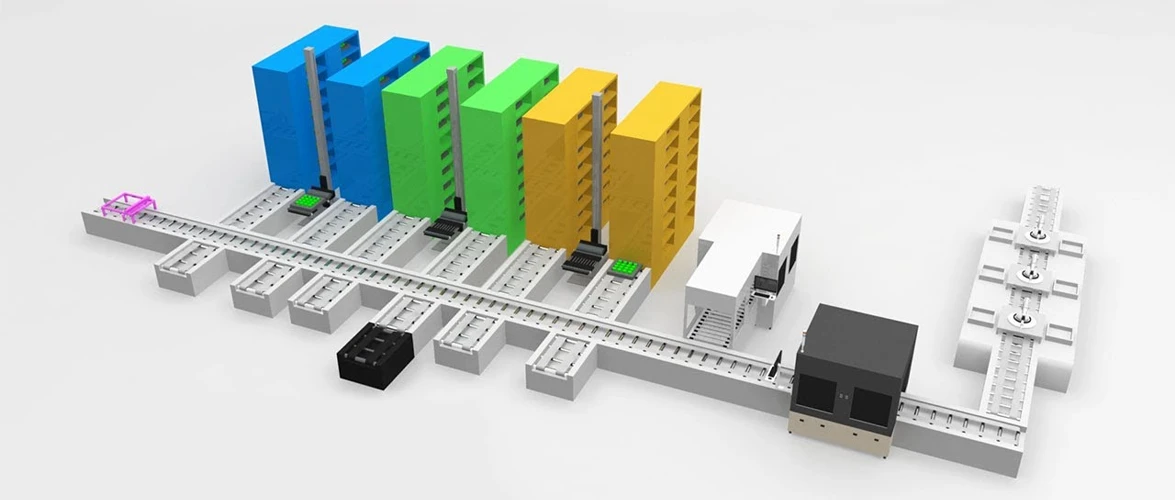
1. Premier remplissage d'électrolyte après l'assemblage de la cellule
Une fois l'empilement d'électrodes ou le rouleau inséré dans le boîtier de la cellule, il faut procéder au premier remplissage d'électrolyte. Dans le jargon industriel, cette étape est appelée « premier remplissage », car un second remplissage sera nécessaire ultérieurement.
Lors du premier remplissage, la cellule assemblée est placée dans une chambre de remplissage sous vide. La chambre est mise sous vide afin de créer une dépression à l'intérieur de la cellule. Une fois la pression interne suffisamment basse, la vanne d'électrolyte est ouverte et l'électrolyte s'écoule dans la cellule grâce à la différence de pression. Cette méthode garantit une pénétration plus efficace de l'électrolyte dans les pores du séparateur et la structure des électrodes qu'un simple remplissage à pression atmosphérique.
Le but du premier remplissage n'est pas seulement d'introduire l'électrolyte, mais aussi d'assurer un mouillage uniforme des électrodes poreuses. Un mouillage insuffisant peut entraîner une résistance interne élevée, une formation non uniforme de l'interface électrolyte solide (SEI) et une perte de capacité lors des étapes ultérieures.
2. Vieillissement à haute température pour le mouillage de l'électrolyte
Les piles ne peuvent pas être chargées immédiatement après le premier remplissage. Quiconque a déjà manipulé des piles bouton ou des piles de laboratoire sait que les batteries nouvellement assemblées doivent reposer un certain temps afin que l'électrolyte imprègne complètement les électrodes. En production industrielle, cette étape est réalisée par vieillissement à haute température.
Les cellules sont placées dans une chambre de vieillissement à haute température contrôlée pendant une durée déterminée afin d'accélérer la diffusion de l'électrolyte dans les pores des électrodes. Un mouillage adéquat est essentiel à la formation stable de l'interface électrolyte solide (SEI) lors du processus de formation ultérieur.
Durant le vieillissement, la cellule n'est pas encore étanche de façon permanente. Il est donc nécessaire d'utiliser une goupille d'étanchéité temporaire pour fermer l'orifice de remplissage. Sans cette étanchéité temporaire, la température élevée risque d'entraîner l'évaporation de l'électrolyte, ce qui peut provoquer une modification de sa concentration, une instabilité des performances et des risques potentiels pour la sécurité.
Tableau 1 — Objectif du vieillissement à haute température
|
Paramètre |
Objectif d'ingénierie |
Effet sur la batterie |
|
température élevée |
Augmenter la vitesse de diffusion des électrolytes |
Améliore uniformité de mouillage |
|
Contrôle du temps de repos |
Assurer la pénétration complète des électrodes |
Réduit les défauts de formation |
|
Scellement temporaire |
Prévenir l'évaporation des électrolytes |
Maintient la composition électrolytique |
|
Environnement contrôlé |
Éviter la contamination |
Améliore la régularité |
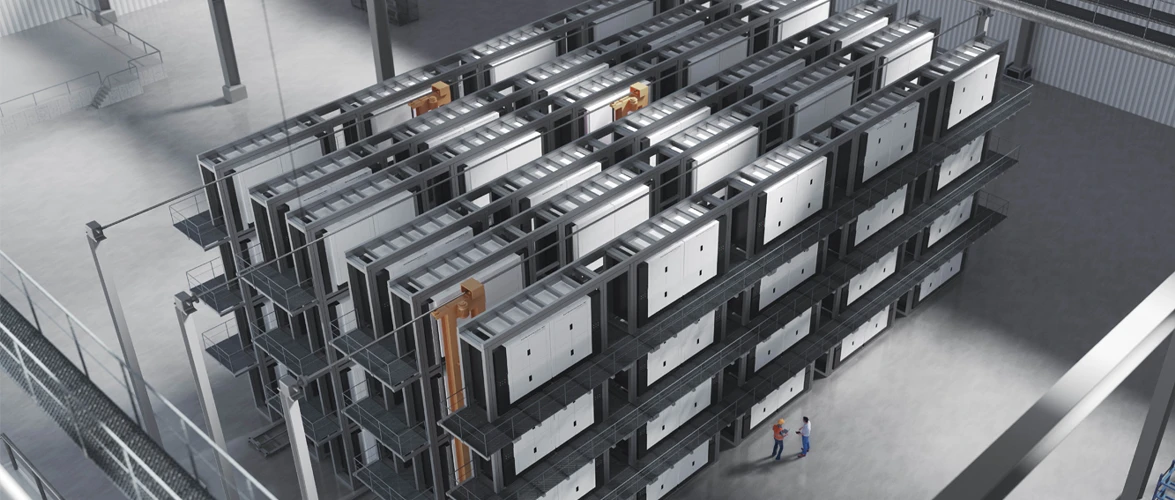
3. Processus de formation et génération du film SEI
Après vieillissement, les cellules entrent dans le processus de formation, qui correspond à la première activation électrochimique de la batterie. L'objectif principal de cette formation est de créer une interface électrolyte solide (SEI) stable à la surface de l'électrode négative.
Lors de la première charge, l'électrolyte se décompose à la surface du graphite, formant une couche SEI fine mais dense. Cette couche laisse passer les ions lithium tout en empêchant la poursuite de la décomposition de l'électrolyte. La qualité du film SEI détermine directement la durée de vie, la résistance interne et la sécurité.
Pour obtenir un film SEI de haute qualité, la formation est généralement réalisée à l'aide d'un profil de courant multi-étapes.
|
Étape |
Niveau actuel |
But |
|
Frais initiaux |
Courant faible |
Formation d'une couche SEI dense |
|
Frais intermédiaires |
Courant modéré |
Stabiliser l'interface |
|
Frais finaux |
Courant plus élevé |
S'adapter aux conditions de travail réelles |
|
Repos / sortie |
Contrôlé |
Vérifier la stabilité |
La formation de l'électrolyte génère des gaz tels que le CO₂ et des hydrocarbures, ce qui entraîne la production de gaz lors de la décomposition de l'électrolyte. Afin d'éviter l'accumulation de gaz à l'interface des électrodes, la production industrielle recourt souvent à la formation sous pression négative, un procédé permettant d'éliminer les gaz pendant le processus.
Le gaz piégé entre les couches d'électrodes peut bloquer les voies de transport des ions lithium, ce qui entraîne une formation non uniforme de l'interface électrolyte solide (SEI) et une variation des performances entre les cellules.
Dans les usines modernes, les systèmes de formation sont conçus conjointement avec les
Équipement de formation et de classement des batteries, assurant un contrôle précis du courant, une stabilité de la température et une gestion des gaz.
4. Remplissage d'électrolyte secondaire
Après sa formation, la cellule subit un second remplissage d'électrolyte.
Deux raisons principales justifient cette étape :
- La formation de l'interface électrolyte solide (SEI) consomme une partie de l'électrolyte.La formation d'une pression négative élimine une partie de l'électrolyte ainsi que du gaz.
Par conséquent, la quantité d'électrolyte à l'intérieur de la cellule devient inférieure à la valeur prévue. Un remplissage secondaire compense cette diminution. e perte et assure un volume d'électrolytes correct.
L'opération est similaire au premier remplissage, mais la quantité de produit est moindre. Après le second remplissage, l'orifice est soudé afin de sceller définitivement la cellule.
Tableau 2 — Comparaison du premier et du deuxième remplissage
|
Article |
Premier remplissage |
Deuxième remplissage |
|
But |
Mouillage initial |
Élé compensation des cardiolytes |
|
Volume d'électrolytes |
Montant total |
Montant partiel |
|
Timing |
Après assemblage |
Après la formation |
|
État de scellement |
Temporaire |
Permanent après remplissage |
5. Mesure de la tension en circuit ouvert et test de la valeur K à haute température
Après scellage, la cellule doit subir deux mesures de tension en circuit ouvert (OCV) avant le classement de capacité.
L'objectif est de calculer la valeur K à haute température, qui décrit le taux d'autodécharge de la batterie.
La formule est :
K = (OCV1−OCV2) / (T2−T1)
Unité : mV/h
Entre les deux mesures, la cellule est conservée à température élevée. Une valeur K élevée indique une chute de tension anormale, pouvant être due à des fuites internes, à une contamination ou à des micro-courts-circuits.
Les cellules présentant une valeur K excessive doivent être supprimées avant la notation.
Tableau 3 — Interprétation de la valeur K à haute température
|
Niveau de valeur K |
Cause possible |
Action |
|
Faible |
Autodi normal charge |
Accepter |
|
Moyen |
Impureté mineure |
Moniteur |
|
Haut |
Micro-court-circuit |
Rejeter |
|
Très haut |
Défaut interne |
Ferraille |
6. Classement de capacité (cycles d'essai de formation)
Le contrôle de capacité est le processus de charge et de décharge de la cellule permettant de mesurer sa capacité, sa résistance interne et son rendement.
Dans la production industrielle, le classement est généralement effectué à un courant relativement élevé (0,5C–1C) pour simuler les conditions de fonctionnement réelles.
Les cellules sont ensuite triées en différentes catégories en fonction de leur capacité mesurée.
Exemple de classification :
|
Grade |
Plage de capacité |
Application |
|
UN |
Capacité maximale |
Pack haute performance |
|
B |
Standard |
Norme tous les produits |
|
C |
capacité réduite |
Utilisation secondaire |
|
Rejeter |
Hors spécifications |
Ferraille |
Les machines de calibrage doivent assurer un contrôle précis du courant, une gestion de la température et une grande homogénéité des canaux, c'est pourquoi elles sont généralement intégrées dans un système.
Solution de ligne pilote ou de ligne de production de batteries plutôt qu'utilisée comme équipement autonome.
7. Test de la valeur K à température ambiante après dépolarisation
Après le tri, les cellules ne peuvent pas être testées immédiatement une seconde fois. La batterie doit reposer à température ambiante pour permettre sa dépolarisation.
Immédiatement après la charge et la décharge, la tension chute rapidement en raison de la relaxation du potentiel d'électrode. Si la tension en circuit ouvert (OCV) est mesurée immédiatement, la valeur de K calculée sera artificiellement élevée.
Par conséquent, les cellules sont stockées pendant une période donnée jusqu'à ce que la tension se stabilise, puis un deuxième test de valeur K est effectué à température ambiante.
Ce test permet d'éliminer davantage de cellules défectueuses avant l'expédition.
8. Libération finale des cellules qualifiées
Après avoir terminé :
- Premier remplissage
- Vieillissement
- Formation
- Deuxième remplissage
- Test K à haute température
- Évaluation des capacités
- Test K à température ambiante
Les cellules peuvent être libérées de l'usine.
Bien que ces étapes interviennent en fin de processus, elles sont déterminantes pour la conformité de la batterie à ses spécifications. Une formation incomplète, un mouillage insuffisant, une quantité d'électrolyte insuffisante ou un calibrage inexact réduiront directement sa durée de vie et sa régularité.
C’est pourquoi la section de formation et de classement est souvent la partie d’une usine de batteries qui consomme le plus d’énergie, de temps et d’équipements, et doit être prise en compte dès les premières étapes de la conception de l’usine.
À propos de TOB NEW ENERGY
TOB NOUVELLE ÉNERGIE est un fournisseur mondial de solutions complètes pour la fabrication de batteries, couvrant les lignes de recherche en laboratoire, les lignes pilotes et les lignes de production à grande échelle. L'entreprise propose la planification d'usine, la fabrication d'équipements, l'intégration des procédés, l'installation, la mise en service et la formation technique pour les technologies de batteries lithium-ion, sodium-ion, à l'état solide et de nouvelle génération.
Découvrez nos solutions complètes : Solutions de production de batteries TOB NEW ENERGY
 abonnez-vous